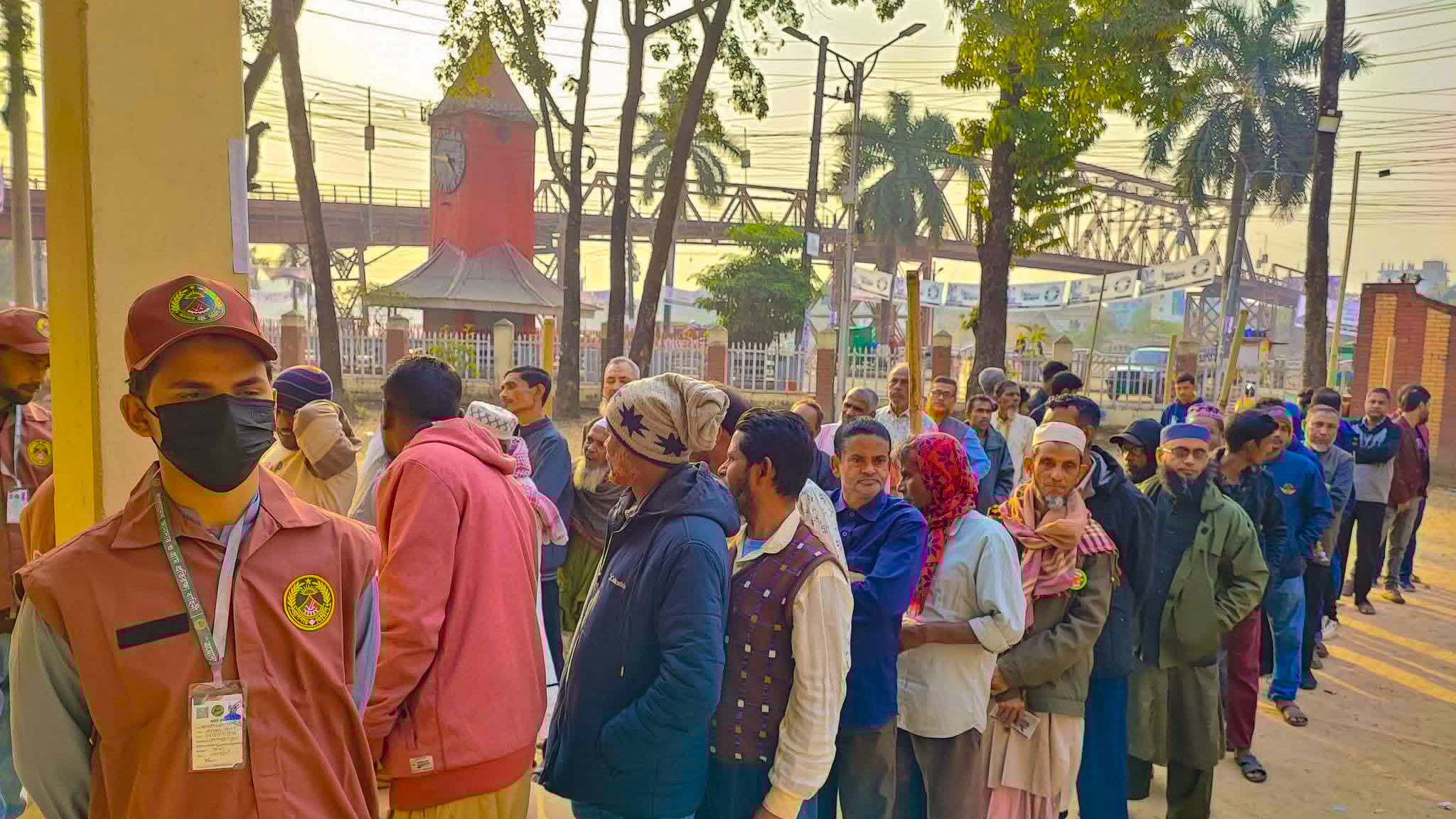
The 13th national parliamentary election is underway in Sylhet and across Bangladesh. Polling began Thursday morning at 7:30am and will continue until 4:30pm. Voters are casting ballots not only for parliamentary seats but also for a referendum aimed at implementing the July Charter. Citizens are using two ballots: white for the national parliamentary election and pink for the referendum.
Authorities have put unprecedented security measures in place to prevent violence, disorder, or other untoward incidents. This includes deploying armed forces, Border Guard Bangladesh (BGB), Rapid Action Battalion (RAB), police, and Ansar teams across polling stations. Executive magistrates are also present to address election-related offenses on the spot.
Each polling centre has been classified into three security categories: general, important, and highly important. Additional law enforcement personnel, mobile teams, and striking forces have been deployed at important and highly important centres. Technology has been heavily leveraged, including body-worn cameras, CCTV, and drones to monitor the process.
In Sylhet, 33 candidates are contesting six parliamentary constituencies, with 2,916,579 voters expected to participate. Early on Thursday morning, eager voters could be seen waiting outside polling stations well before the 7:30am opening.
District officials report 1,100 polling centres, all under CCTV surveillance. Major markets and public spaces are also being monitored. Over 19,000 polling agents and officers are overseeing the election. Drones are monitoring polling centres from above, and executive magistrates, judicial officers, and mobile teams are on duty to ensure smooth operations. Each station has a team of Ansar, police, and other security personnel, supported by striking and reserve forces.
Sylhet Metropolitan Police Commissioner Abdul Kuddus Chowdhury confirmed that maximum preparations have been made for a peaceful election. Mobile teams, striking units, and standby teams are active, with real-time updates being monitored through the Zinia app. Ten drones provide continuous surveillance. RAB-9 commander Wing Commander Tajminur Rahman noted special attention is given to minority and tea garden areas, with over 550 RAB members deployed, including bomb disposal units in sensitive zones.