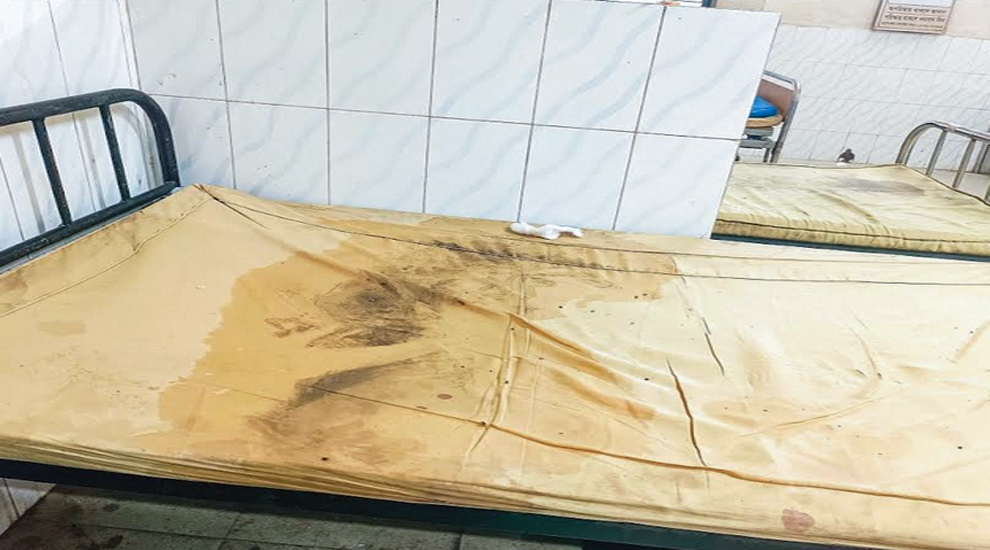
A troubling picture has emerged about the environment at Beanibazar Upazila Health Complex in Sylhet. Once recognised nationally for its emergency maternal and healthcare services, the hospital now appears weighed down by poor management and lack of cleanliness.
A visit to the facility revealed discarded tissues, used saline packets, bandages, and cotton scattered across the floors. Stains of spit marks and betel quid stains were visible on the walls, reflecting an overall neglect of hygiene.
The toilets are unhygienic, bed sheets appear unclean, and mosquitoes and flies are common—painting a troubling scene inside the hospital. Observers say inadequate supervision has allowed the situation to deteriorate at a facility that once earned national recognition for mother-and-child care.
Health experts warn that a patient’s recovery largely depends on a clean hospital environment. Poor sanitation can increase the risk of respiratory and kidney complications, while also exposing patients to infections such as tuberculosis, cholera, and diarrhoea. Maintaining hygiene, they stress, is not optional—it is essential.
Hospital sources said the outpatient department treats around 150–200 patients daily, while another 100–150 seek care at the emergency unit. On average, 15–20 patients remain admitted. Including attendants, nearly 500–700 people crowd the hospital each day, with patients arriving not only from its 10 union and one municipality but also from neighbouring upazila.
Although the hospital has 14 toilets, patients allege that none are truly usable. Despite a rule requiring cleaning twice a day, the reality appears different, patients allege the schedule is rarely followed. On the second floor’s male ward, dirty water was seen pooled on the bathroom floors, damaged fixtures were left unrepaired, and some doors were tied with nylon ropes instead of functional locks.
One patient, Azim Uddin, said he could not even find a bucket for bathing, adding that using the toilet felt nearly impossible. Another patient, Samsul Haque, remarked that he had never seen such an unclean bathroom before.
Used saline bags were also spotted lying beside the toilets. In both male and female wards, most bed sheets appeared unclean. While water was available in the female ward toilets, the strong odour forced some patients to cover their noses before entering. None of the three cabin toilets had working flush systems, leaving waste accumulated in the commodes.
A cabin patient said, “I have to clean the toilet myself with a bucket before using it.”
Another patient, requesting anonymity, questioned, “Is this a hospital or a dumping ground? It’s hard to tell.”
Rabia Begum, admitted to the female ward, said she fears falling sick again in such an unhealthy environment after coming for treatment.
Upazila Health Officer Dr. Monirul Haque Khan said the authorities are trying to ensure quality care. “We will look into why the toilets are in such condition,” he said, also pointing to a lack of awareness among some patients and attendants.